
Fog is one of the most challenging and often underestimated weather conditions drivers face. It limits visibility, reduces reaction time and makes even familiar roads feel unfamiliar. This is why driving in fog requires calmness, the right techniques and good knowledge of your vehicle’s lighting systems. With proper preparation you can stay safe even when conditions become difficult.

In this guide you will learn everything you need to know about car fog lights, how they work, how to turn on fog lights correctly and what steps to follow to reduce risks on the road. You will also find tips on how to prepare your vehicle before any trip, especially if you are using a rental car from Let’s Drive.
Fog can appear suddenly and reduce visibility to just a few meters. This means you don’t see cars, curves, pedestrians or obstacles in time. Driving in fog requires you to drive at a slower speed, increase your following distance and use the appropriate lights.
Reduced visibility also makes it more difficult to judge distances. If you don’t adapt immediately, the risk of an accident increases. That’s why it’s important to know every function of your car.

Many drivers make the mistake of using their high beams. However, this reflects off the water vapor and creates a white veil that further reduces visibility. In contrast, car fog lights have special lower lighting that diffuses under the layer of fog and allows you to see the road better.
If you don’t know how to turn on your fog lights, the process varies depending on the car model. There is usually a separate switch or button on the dashboard. Before embarking on a journey with a possibility of fog, it is a good idea to familiarize yourself with the controls.
Fog lights are used not only for better visibility but also so that other drivers can see you. You can use them when:
Visibility is under 100 meters
There is dense fog
There is fog at the city entrance or exit
You are driving in mountainous areas early in the morning or late at night
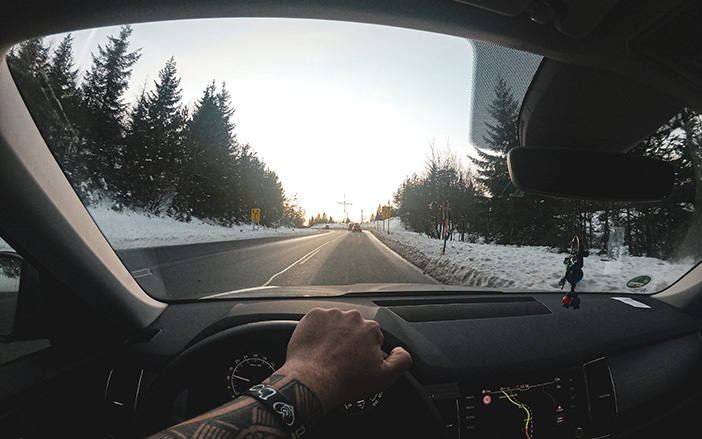
However, be careful: it is not allowed to use them when there is no fog, as they will blind other drivers.
When driving in fog, one of the golden rules is stability. Fog can make you feel insecure and may tempt you to change lanes or speed abruptly. This is wrong. You need:
Steady speed
Smooth accelerations
Avoid sudden braking
Maintain a straight path
If you need to change lanes, do it slowly and carefully. Use your indicators earlier than usual. In dense fog, the distance you can see in front of you decreases. If you follow a car too closely, there is a high risk of collision. Keep at least three times the normal distance.
This is even more important on mountain routes or unfamiliar roads. Driving in fog becomes safer when you have room to react.
When visibility drops, don’t try to look too far ahead. Instead, focus on the white lines under your car. These will help you stay on course and avoid veering off.
On some roads, the right line is a better guide than the center. This way, you stay in your lane and drive safely.
If you know you'll be driving in an area with frequent fog, make sure to perform a quick technical check:
Ensure all lights are working
Clean the windshield properly
Check the wipers
Ensure tires are properly inflated
Turn on the heating to avoid fogging
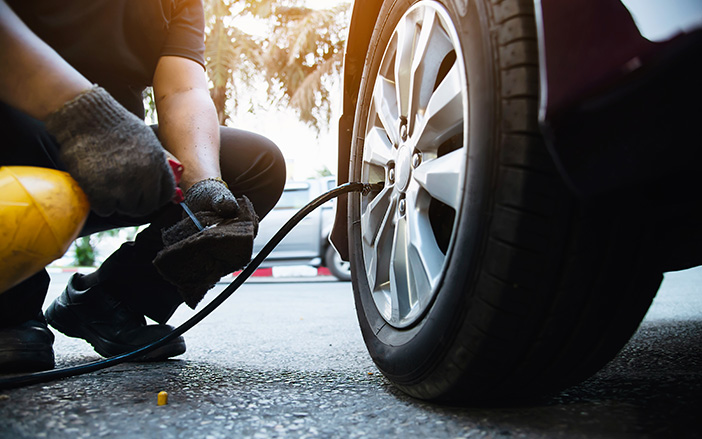
Clean surfaces and proper lighting make a huge difference when driving in fog.
Mountain areas often have dense fog due to humidity and temperature changes. Extra caution is needed here. Don’t make sudden turns, keep a low speed, and use your fog lights from the beginning to the end of the trip.
If you’re driving in winter, you might encounter ice. In this case, it’s useful to have read our guide Car Rental with Snow Chains: Everything You Need to Know to be fully prepared.
There are times when visibility drops to zero. If you feel you can’t continue:
Turn on the hazard lights
Gradually reduce speed
Find a safe place to stop
Never stop in the traffic lane
Wait until the conditions improve
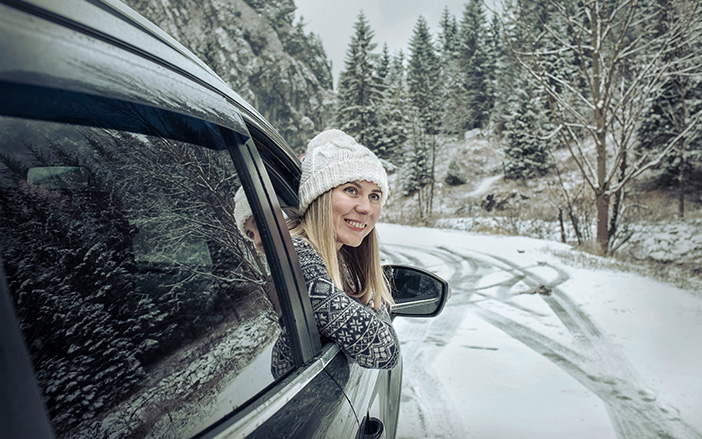
In such cases, safety is the priority.
If you’re traveling with a vehicle from Let’s Drive, you have a significant advantage: every car is checked before pickup to ensure the lighting systems and wipers are in perfect working condition. Whether you pick up from Athens or Thessaloniki, you can choose from many vehicle categories.
For immediate pickup, check out our Car Rental in Athens City Center, and for trips in Northern Greece, see Car Rental at Thessaloniki Airport.
With Let’s Drive, you always have a reliable vehicle that passes all checks, ensuring every trip is safe, even in challenging conditions.
